
An overswing is something many amateur golfers struggle with, but perhaps don’t quite understand where it comes from and how destructive it can be to their game.
Learning how to stop overswinging can help to unlock untapped power, transform your ball striking and limit costly errors on the golf course.
In this article, PGA Pro and Golf Monthly Top 50 Coach John Jacobs shares the root causes and some simple strategies to cure your overswing in golf…
What is an overswing in golf?
An overswing is when you take the club too far back in the backswing, allowing it to travel past past parallel (to the ground) at the top. This causes some players to get a little steep in their swing and will almost certainly cost you in terms of distance.
Some great players in the game were famously very successful with an overswing, like two-time Major Champion John Daly, but for most amateur golfers an overswing will lead to inconsistent ball striking and erratic scoring.
Overswing In Golf: The Cause And The Cure
People who tend to overswing lose the concept of how far the club travels in the backswing and think it’s neutral at the top or going back to the right position. A good way to remedy things is to try and feel that your left arm is travelling to no further than parallel from the ground. Swinging to what you feel is a half or three-quarter backswing length will often actually get you swinging to the correct length.
John Daly had an extremely successful career with a considerable overswing, but for many amateur golfers this characteristic leads to inconsistent ball striking
(Image credit: Getty Images)
Having a poor hold on the club can also lead to an overswing. Aside from working on the perfect golf grip, one of the best things you can do is to shorten your left thumb to help support the club more. The tip of your thumb should be about half to three-quarters of an inch away from the tip of the knuckle on your forefinger. People who wear a hole in the thumb of their glove are often overswingers who have their left thumb too flat, so it just gives way at the top.
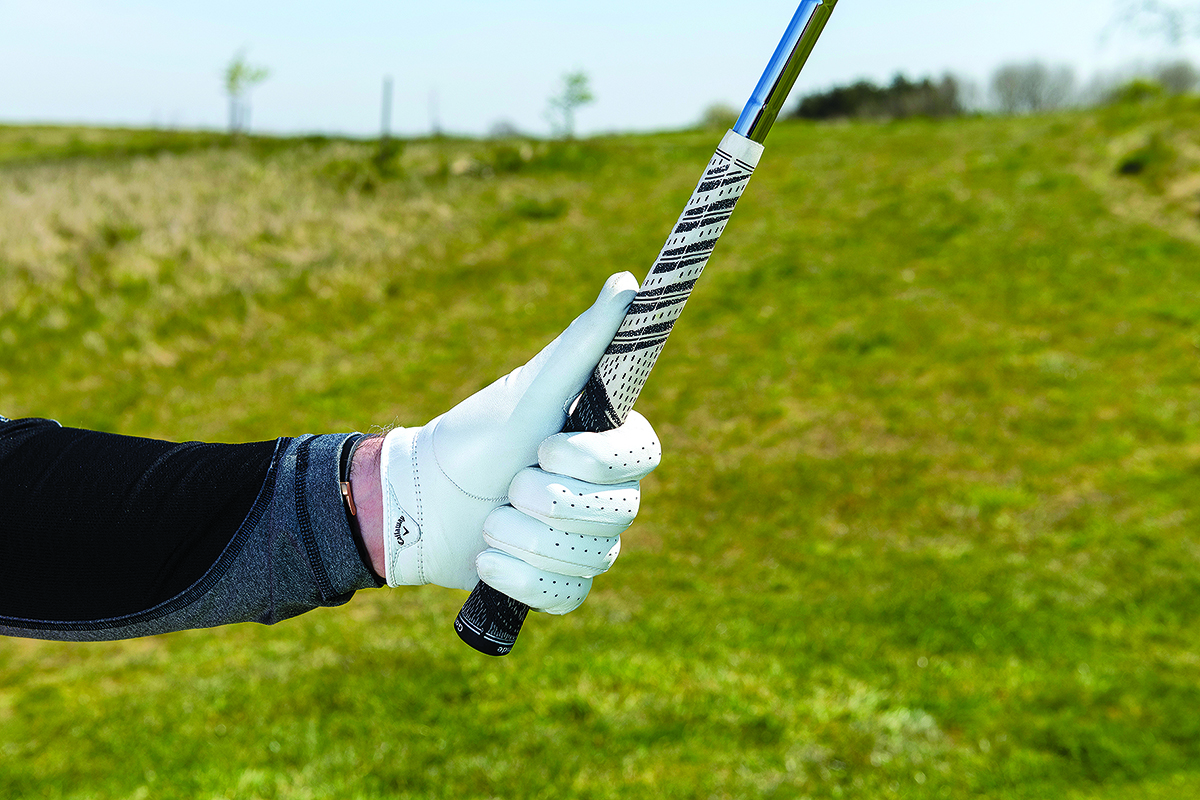
Allowing the thumb to extend too far down the grip of the club is a common fault leading to an overswing in golf
(Image credit: Tom Miles)
Understanding how to get a straight left arm in your golf swing is very important, as too narrow a backswing can also cause an overswing – with the left arm folding at the top rather than extending.
You need to swing as far to the right as you can without swaying…
..
Click Here to Read the Full Original Article at Latest from Golf Monthly in Tips…